 Daniel Schick
a5b16154c6
Daniel Schick
a5b16154c6
The trick was to use a helper-field and a (decorated) @post_load method in the model that allows to fill the helper fields with the values (ints) instead of strings for enums. Trouble is: We are parsing strings from API/JSON and want to serialize as int (value in IntEnum). The helper fields also must be skipped when setting up the query. Pretty convoluted, but gets the jon done (finally). Also extended the database by new field 'interval_end' which is a preparation to allow not only timestamps but also intervals when specifying times for participants. |
||
|---|---|---|
| .. | ||
| BreCal | ||
| tests | ||
| flaskapp.wsgi | ||
| README.md | ||
| requirements.txt | ||
| setup.py | ||
BreCal
OpenAPI 3.0 Generated Flask project
The code was originally created by exporting the API from Postman. Selecting the API on the left (root element) the code generation icon becomes visible on the right.
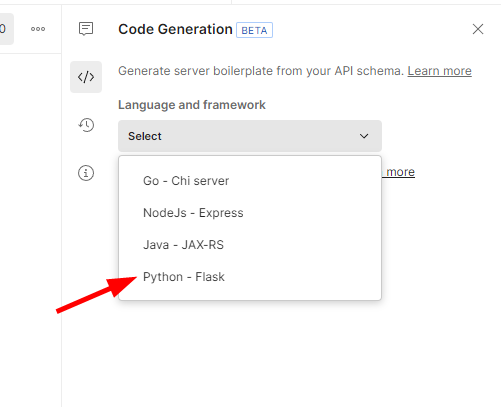
If the API gets updated I think it makes most sense to export again into a API helper branch and then merge this branch back into the project. Please do not forget to update the index.yaml file. The branch is named yaml_export.
All the routes are defined in 'project/api' folder. Each route parses the request and calls the corresponding function in the 'project/impl' directory passing all the parameters and request body as function arguments.
To run this project:
pip install -r requirements.txt
export FLASK_APP='BreCal'
export FLASK_ENV=development
flask run