Bremen calling
This repository has been archived on 2025-02-17. You can view files and clone it, but cannot push or open issues or pull requests.
Go to file
2023-10-04 14:55:58 +02:00
.vscode initial commit 2023-09-08 06:09:24 +02:00
docs adding more variable names in the xlsx file 2023-09-08 22:30:21 +02:00
misc initial commit 2023-09-08 06:09:24 +02:00
src adding stubs, validators and tests for these. Adaptation of data model 'shipcall' (validation_state and validation_state_changed). Adding request status codes (HTTP default format) and input validation. A tester for input validation is also prepared. 2023-10-04 14:55:58 +02:00
.gitignore adding stubs, validators and tests for these. Adaptation of data model 'shipcall' (validation_state and validation_state_changed). Adding request status codes (HTTP default format) and input validation. A tester for input validation is also prepared. 2023-10-04 14:55:58 +02:00
environment.yml updating validators, time handling, creating tests for time & schemas. Decoupling schema validation according to the dataclasses. Starting to stub & create notifications 2023-09-15 13:16:21 +02:00
README.md initial commit 2023-09-08 06:09:24 +02:00

Bremen Calling


Projekt zur verbesserten Kommunikation der maritimen Partner bei Schiffsanläufen in Bremen.

Anforderungen

Architektur

Die Architektur besteht aus einer Datenbank und einem in Python implementierten Backend, das eine API zu Verfügung stellt. Diese API ist als OpenAPI 3.0 spezifiziert. Die Anwendung selbst kommuniziert nur über diese API mit der Datenbank. Es sind damit unterschiedliche Anwendungsplattformen denkbar, etwa eine Web-, Mobile- oder Windows Desktop Anwendung. In dieser Folie ist ein Bild / Überblick enthalten.

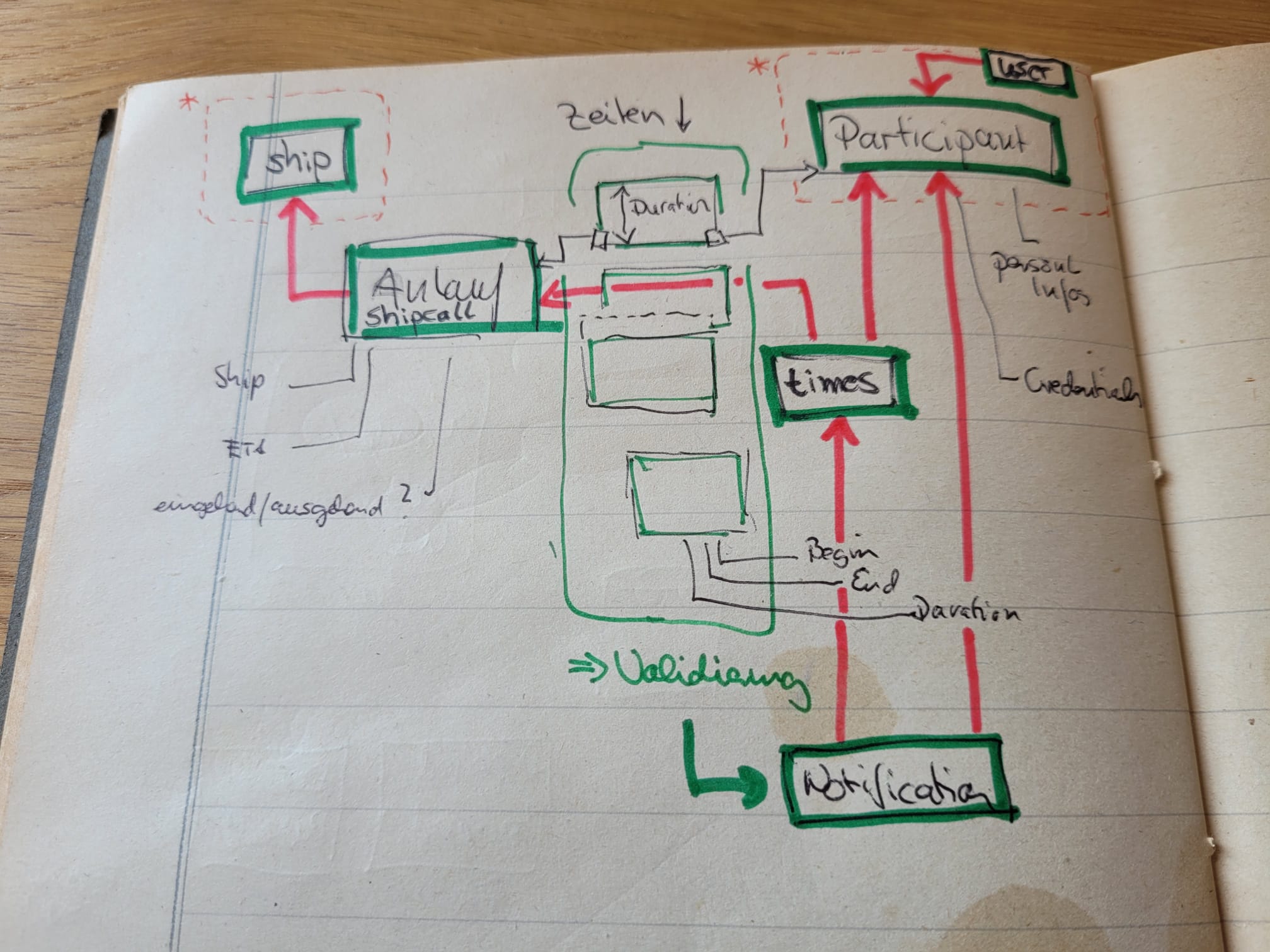
Ein erster Gedanke des Datenbank-Layouts sieht folgendermaßen aus: image
Entwicklung

Postman

Zum Debuggen der Flask App verwende ich dieses Tutorial: https://code.visualstudio.com/docs/python/tutorial-flask#_create-a-project-environment-for-the-flask-tutorial